


Packaging
-
B2B food packaging: how cartons and secondary packaging affect distribution costs

Food packaging continues to influence distribution costs even after fulfilling its primary role of protecting products. Cartons, trays and multipacks are handled repeatedly in warehouses, where their shape, construction and strength can affect order picking times. A study published in the Journal of Business Logistics, involving researchers from Politecnico di Milano and the University of Bologna, examined these effects using data from more than 3.3 million picking operations. The findings offer valuable insights for food manufacturers, packaging suppliers and distributors seeking to develop packaging that also meets the operational requirements of the supply chain.
-
New EU limits on MOAH in food checks on raw materials, processing and packaging

The European Union is preparing to introduce new limits on mineral oil aromatic hydrocarbons(MOAH) across a wide range of food categories. The proposal has received the support of the Member States, and the European Commission indicates October 2026 as the expected timeframe for formal adoption. Most of the new limits are expected to apply from January 1, 2027, with longer transition periods for certain categories.
-
UK packaging EPR: why packaging design will increasingly affect the cost of selling food in Britain

In the UK, packaging design is increasingly becoming a cost variable. From 2026/27, under the Extended Producer Responsibility (EPR) for packaging scheme, the disposal fees charged to large producers for household packaging waste are being modulated according to recyclability. Packaging that is harder to recycle attracts higher fees, while packaging rated as more recyclable can benefit from a discount.
-
FDA steps up scrutiny of food ingredients, additives and packaging: implications for companies operating in the U.S. market

The U.S. Food and Drug Administration has published the updated 2026 guidance agenda for its Human Foods Program, outlining the guidance documents under development and the priority areas of interest for the food sector. The document confirms an increasingly clear direction from U.S. regulators, with growing attention to ingredients, food and color additives, chemical contaminants and substances used in food contact materials.
-
Flexible production lines: packaging, variable formats and new food retail requirements

In the food sector, production flexibility is becoming increasingly connected to packaging. Distributors and retailers are asking for broader assortments, dedicated versions, different formats, channel-specific packs and faster response times. For food producers, this means rethinking lines with a different approach, one that can manage variants without losing efficiency.
-
New EU packaging guidance: what the food industry needs to know

With the publication of the new interpretative guidance and the FAQs on the Packaging and Packaging Waste Regulation (PPWR), the European Commission has clarified several points that had remained only partially defined for food companies, importers, exporters and packaging suppliers. The aim is to make some practical aspects easier to understand: who is actually responsible, which obligations start in 2026, which ones will apply later, and which areas already require technical documentation and internal checks.
-
Green packaging for the food sector: ISI Plast's solutions for high-performance, sustainable packaging

In the food sector, green packaging is no longer just a stated goal - it is increasingly a matter of concrete operational choices. Producers and distributors are looking for packaging solutions that can reduce environmental impact and align with circular economy principles, without compromising essential requirements such as stability, functionality and compatibility with production, storage and distribution processes.
-
Fresh preparations and creams: why packaging matters for protection, handling and brand identity. ISI Plast's solution

When working with fresh preparations or semi-finished ingredients - from gelato bases to creams, as well as yogurt and other deli counter items - packaging is not a minor detail. Choosing the right container affects hygiene, shelf life, lab organization, and logistics.
-
New requirements in food packaging: what consumers and buyers expect

In the packaging sector, companies are facing increasingly complex challenges: from rapidly evolving regulations in the United States and Europe, to new R&D investments aimed at developing innovative, safe and sustainable materials. Added to this is the growing attention toward potentially harmful substances in food packaging, a topic of rising importance for consumers, buyers and distributors. Finally, the expansion of e-commerce continues to highlight the need for solutions specifically designed for direct-to-consumer shipping.
-
Packaging for Artisanal Panettone: ISI Plast’s Solution Combining Design, Functionality, and Product Appeal

Panettone is a delicate product that requires packaging capable of protecting it while also enhancing its presentation. For artisanal producers, food companies, and distribution operators, the choice of the right container impacts product appearance, preservation during transport, and the overall efficiency of storage operations.
-
Flexible Packaging: Market Trends, Innovation, and Implications for the Food Industry

The global flexible packaging market continues to expand, driven by the rising consumption of packaged food and beverages, the growth of e-commerce, and the adoption of lightweight, sustainable, and cost-effective materials. Among these, paper is experiencing the fastest growth thanks to the demand for recyclable and compostable options, while flexible pouches are becoming increasingly popular among packaging formats. Innovations such as high-barrier films, recyclable laminates, and mono-material designs are creating new opportunities for the food industry.
-
Smart Packaging and Active Technologies: Key Trends and Solutions in Food & Beverage
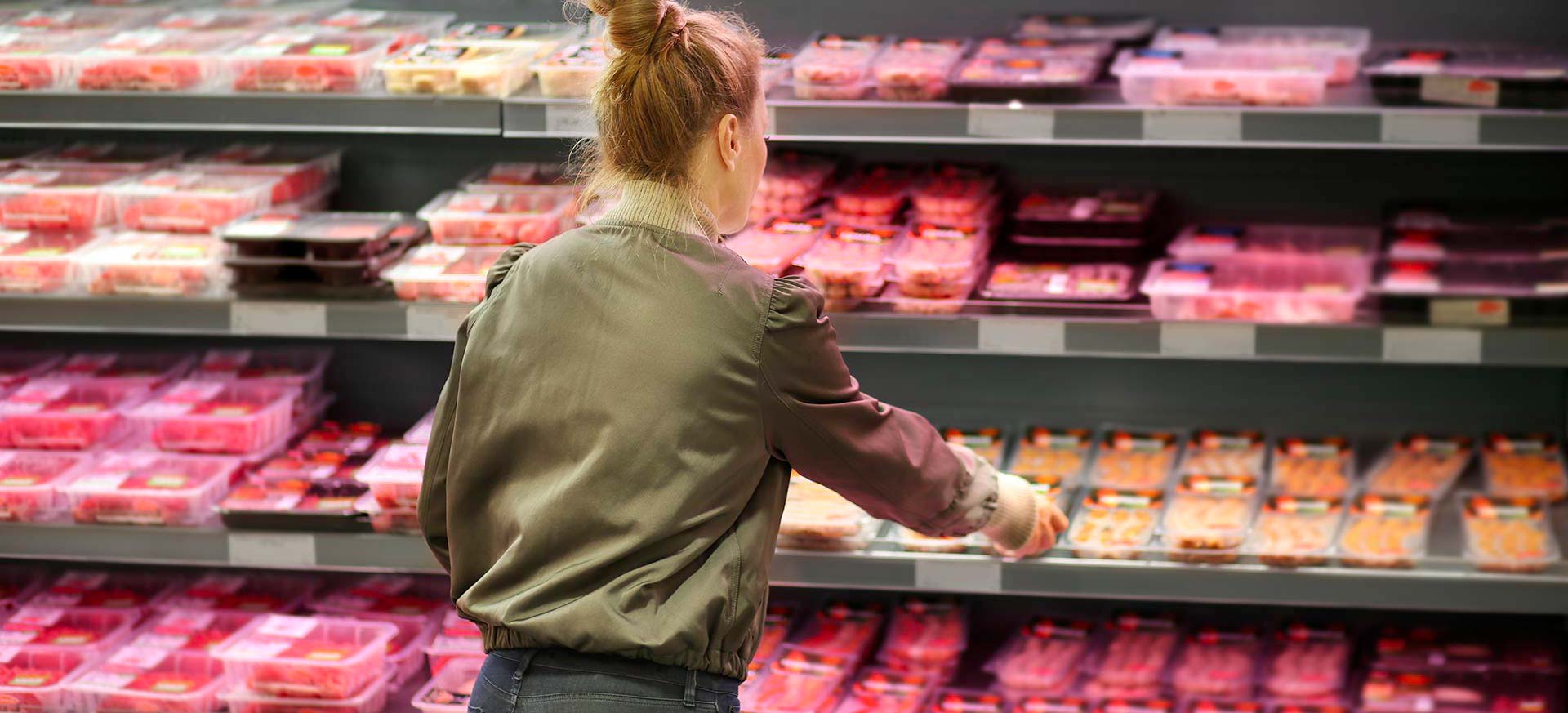
Quality, safety, and sustainability are becoming decisive factors for winning over consumers and buyers, with packaging evolving from a simple container into a strategic asset. For food producers and distributors, new smart and active technologies are opening exciting opportunities: packaging that tracks freshness, detects micro-leaks, or releases natural substances to extend shelf life. These solutions not only reduce waste and management costs but also create a real competitive edge in terms of brand image, positioning, and access to new markets.
-
FBCA Introduces RECY:CHECK: New Certification for Food and Beverage Packaging Recyclability

Food packaging recyclability takes a significant step forward with the introduction of new tools designed to support more circular solutions. The Food and Beverage Carton Alliance (FBCA) has introduced RECY:CHECK, a certification protocol developed to assess the recyclability of fiber-based composite packaging (FBCP). At the same time, FBCA has published the 2025 edition of its "Design for Recycling" Guidelines, which help guide the development of recycling-friendly cartons. These two complementary resources provide tangible support to businesses across the supply chain, helping accelerate the shift toward sustainable and regulation-compliant packaging solutions.
-
Sustainable Food Packaging: An Innovative Solution to Extend Shelf Life of Strawberries and Other Fresh Products

Driven by the new European sustainability directives, the food packaging industry is moving toward increasingly innovative and responsible solutions. A recent study has validated the effectiveness and safety of a new type of biodegradable packaging that not only extends the shelf life of strawberries but also helps significantly reduce microbial growth.
-
Food and Beverage Packaging: Trends, Examples, and Winning Strategies

What's New in Food Packaging Trends? The food packaging industry is always adapting to meet the evolving demands of consumers. Taking a closer look at today's trends, we discover an intriguing snapshot of what consumers are looking for in stores. As we explore several examples, it becomes evident that visual appeal and sustainability play an ever-growing role in influencing purchase decisions.
-
Isothermal Packaging for the Food & Beverage Industry: MdG’s Eco-Friendly Solution Combining Efficiency and Compliance

Within the Food & Beverage sector, ensuring temperature-sensitive products remain properly chilled during transport serves two key goals: maintaining a stable temperature throughout the entire logistics chain and meeting environmental packaging standards. Consequently, packaging choices have an impact not only on product preservation but also on supply-chain sustainability and compliance with European recycling directives.
-
Sustainable Packaging in the Food Sector: Dominant Factors in the Near Future

How worthwhile is it for companies to invest in sustainability? Sustainable packaging is becoming central to business strategies in the food sector, driven by the rising consumer demand, particularly from Generation Z, for eco-friendly solutions. This article explores emerging trends, economic challenges, and innovations that could redefine the future of food packaging.
-
New EU Regulations on Food Packaging: Measures to Limit the Use of Bisphenol A

The European Union has recently approved a proposal by the European Commission to ban the use of Bisphenol A (BPA) in various food packaging. This chemical, commonly found in many products and plastic containers, is known for its ability to migrate in small quantities into food and beverages, posing a potential health risk.
-
The New European Regulation on Packaging continues its Progress

The European Parliament's Committee on Environment and Food Safety (ENVI) has approved the report on the new regulation on packaging (PPWR) proposed by the EU Commission, paving the way for significant changes, including the ban on single-use packaging, with the aim of making the packaging industry more sustainable and reducing its environmental impact.
-
Packaging for Artisanal Food Products: how to communicate protection, durability, aesthetics and identity

To ensure that artisanal food products are protected and presented appropriately, it is important that their packaging has certain characteristics. Below are the characteristics and tips on how to use them to create packaging that effectively communicates the craftsmanship of the product.